Interactive Demos
Subsurface and BIM Data Visualizations
Explore real-world examples of subsurface and BIM data across different platforms. See ground investigation data in CesiumJS 3D maps, MapLibre, and Speckle. For free browser apps you can run on your own files, see our tools.
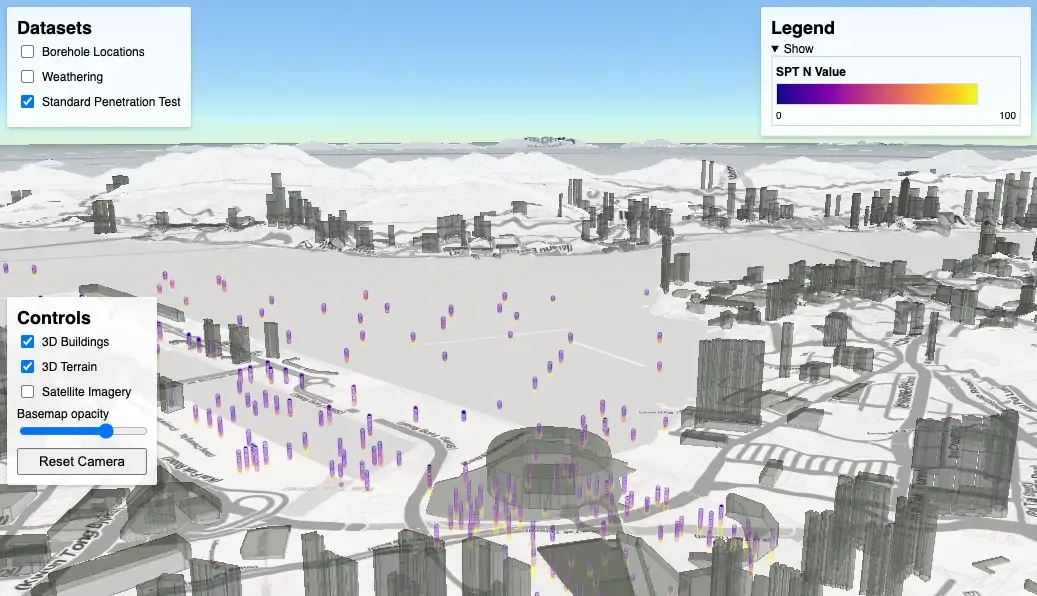
Kai Tak, Hong Kong
Ground investigation data from Kai Tak, Hong Kong, transformed from AGS3 with bedrock-ge. Borehole locations, SPT results and weathering grades in a 3D web map, and alongside building models from Revit and Civil3D in a web-based BIM viewer.
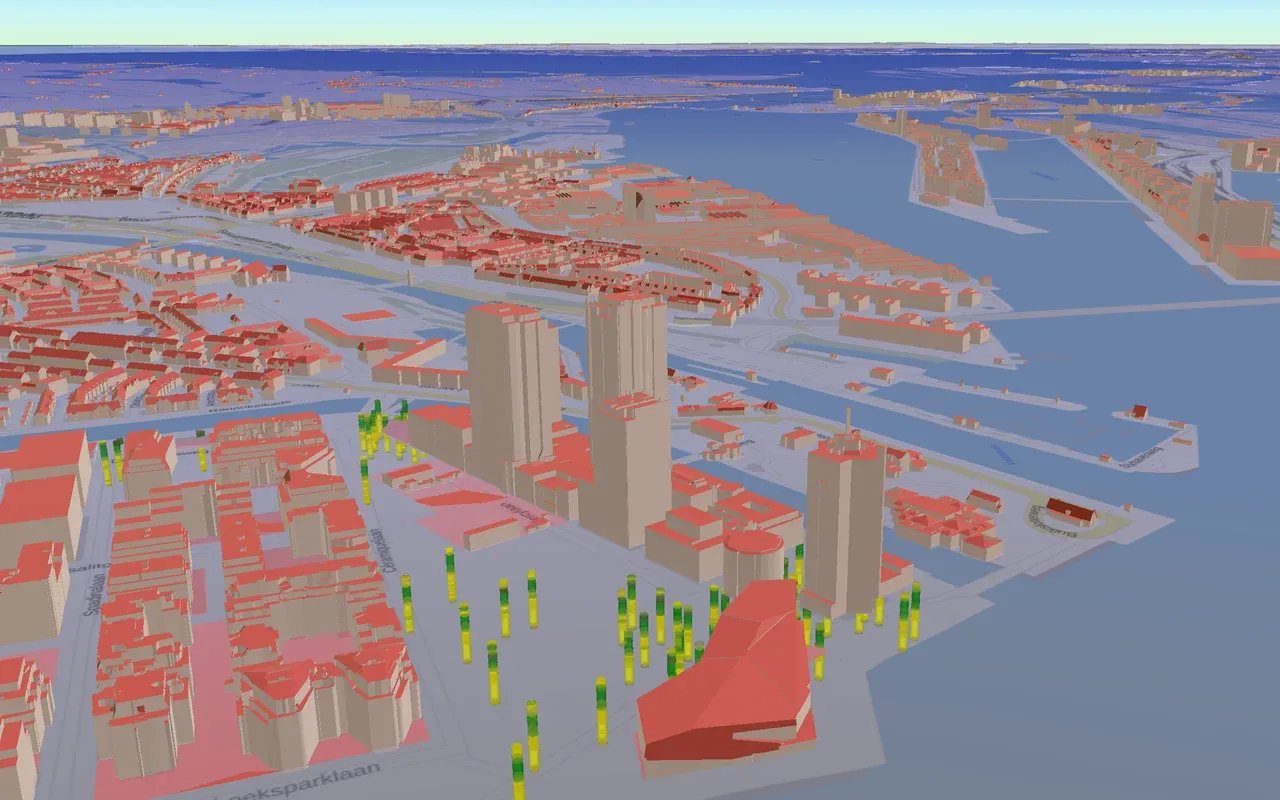
Amsterdam Noord
Interpreted CPT data, the GeoTOP geological model and 3D BAG buildings in Amsterdam Noord in a 3D web map, and the subsurface data next to BIM models in a web-based BIM viewer.
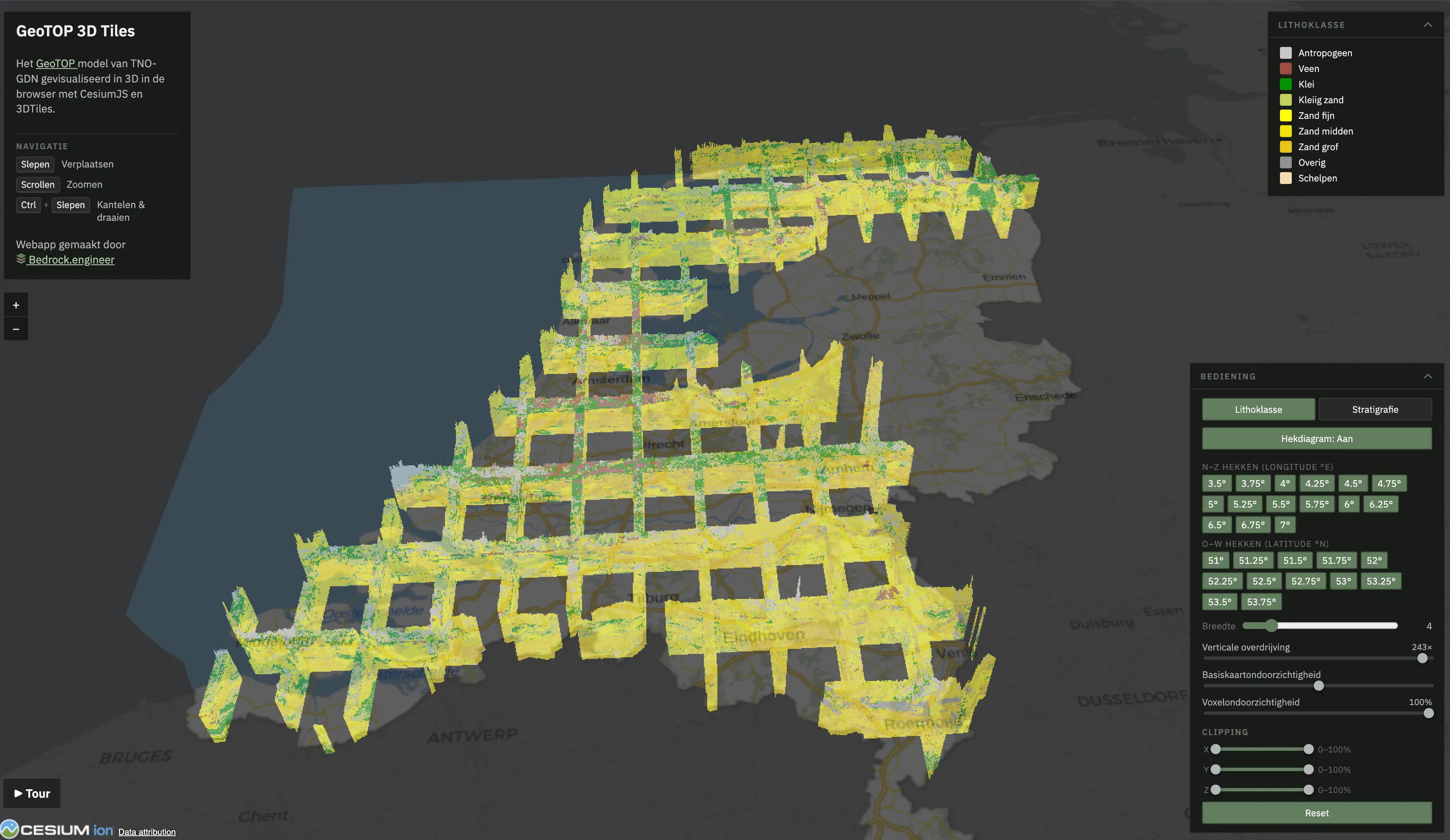
GeoTOP Voxels
The Dutch GeoTOP shallow subsurface model rendered in 3D in a browser for the first time. 100×100×0.5 m voxels with lithoclass information across Amsterdam, Delft, and Utrecht using CesiumJS with the 3D Tiles Voxel extension.
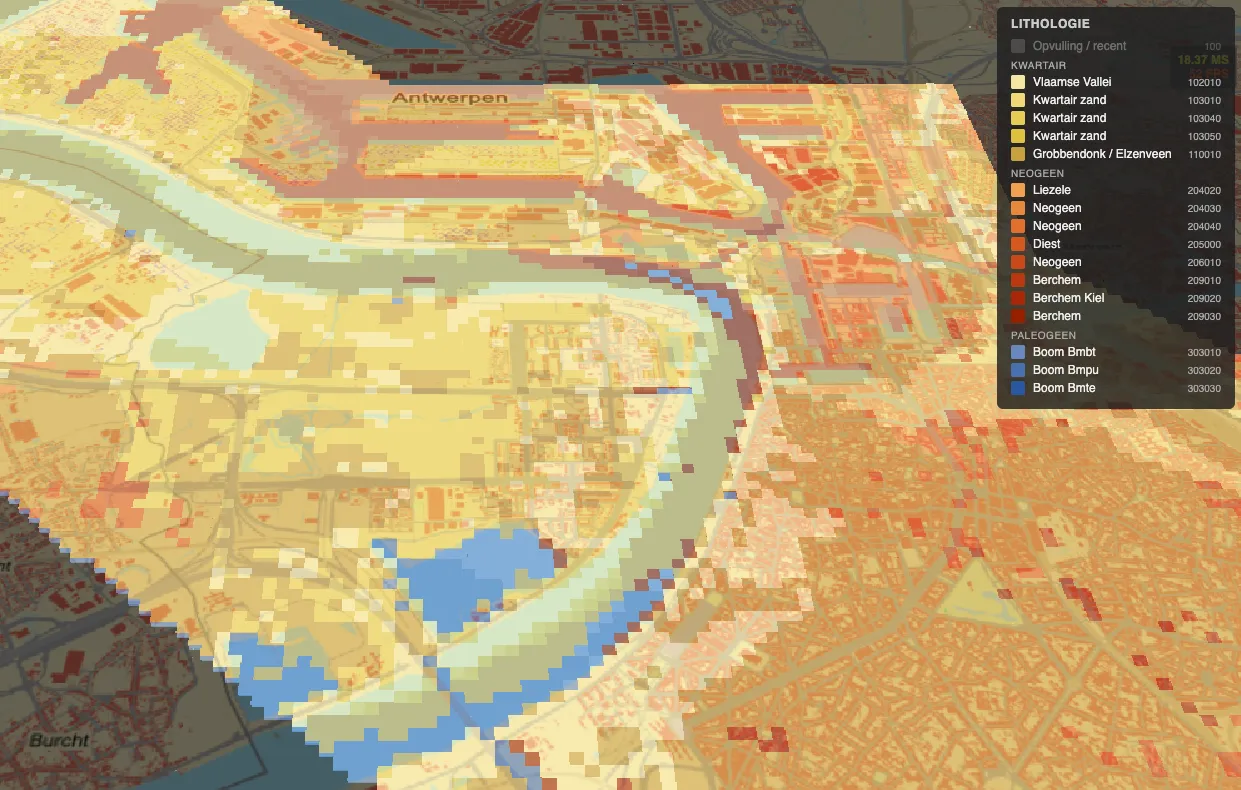
Antwerp Geological Model
The Flemish DOV shallow subsurface model of Antwerp and its harbor as 3D Tiles Voxels in CesiumJS. 25×25×0.5 m voxels — over 21 million in total — with proportional lithology (peat, clay, silt, sand, gravel) from surface to 50 m depth.
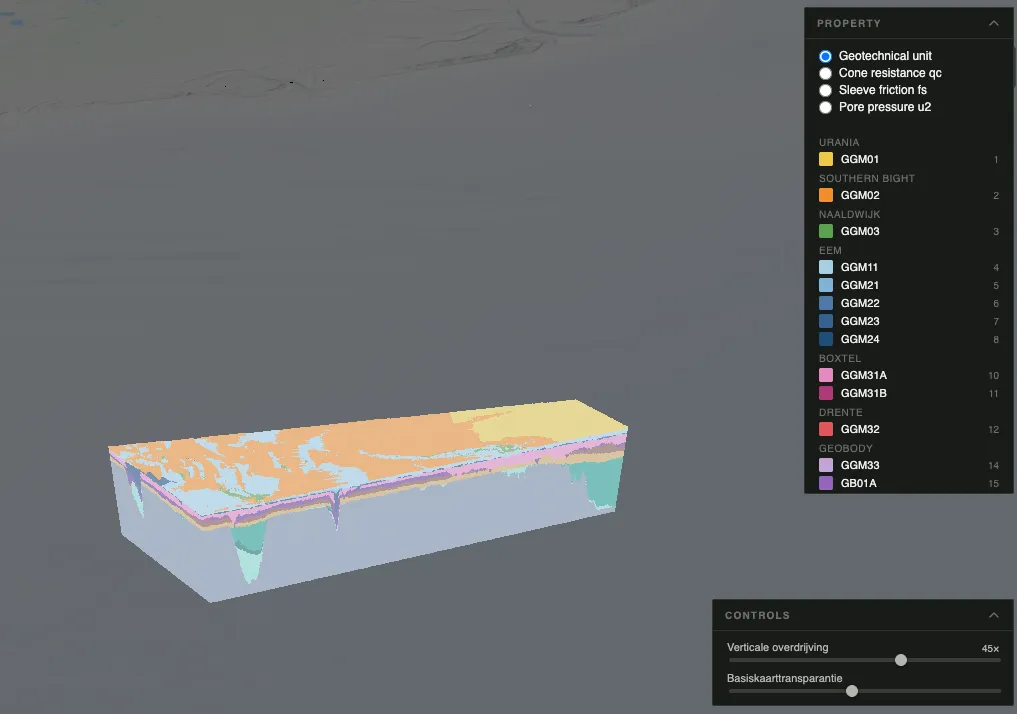
Ten noorden van de Waddeneilanden
The integrated ground model for Ten noorden van de Waddeneilanden, an offshore wind zone north of the Wadden Islands, rendered as 3D Tiles Voxels in CesiumJS. Geological units on a 25×25×0.1 m grid, from the quantitative ground model built by NGI and SAND Geophysics for the Netherlands Enterprise Agency (RVO).
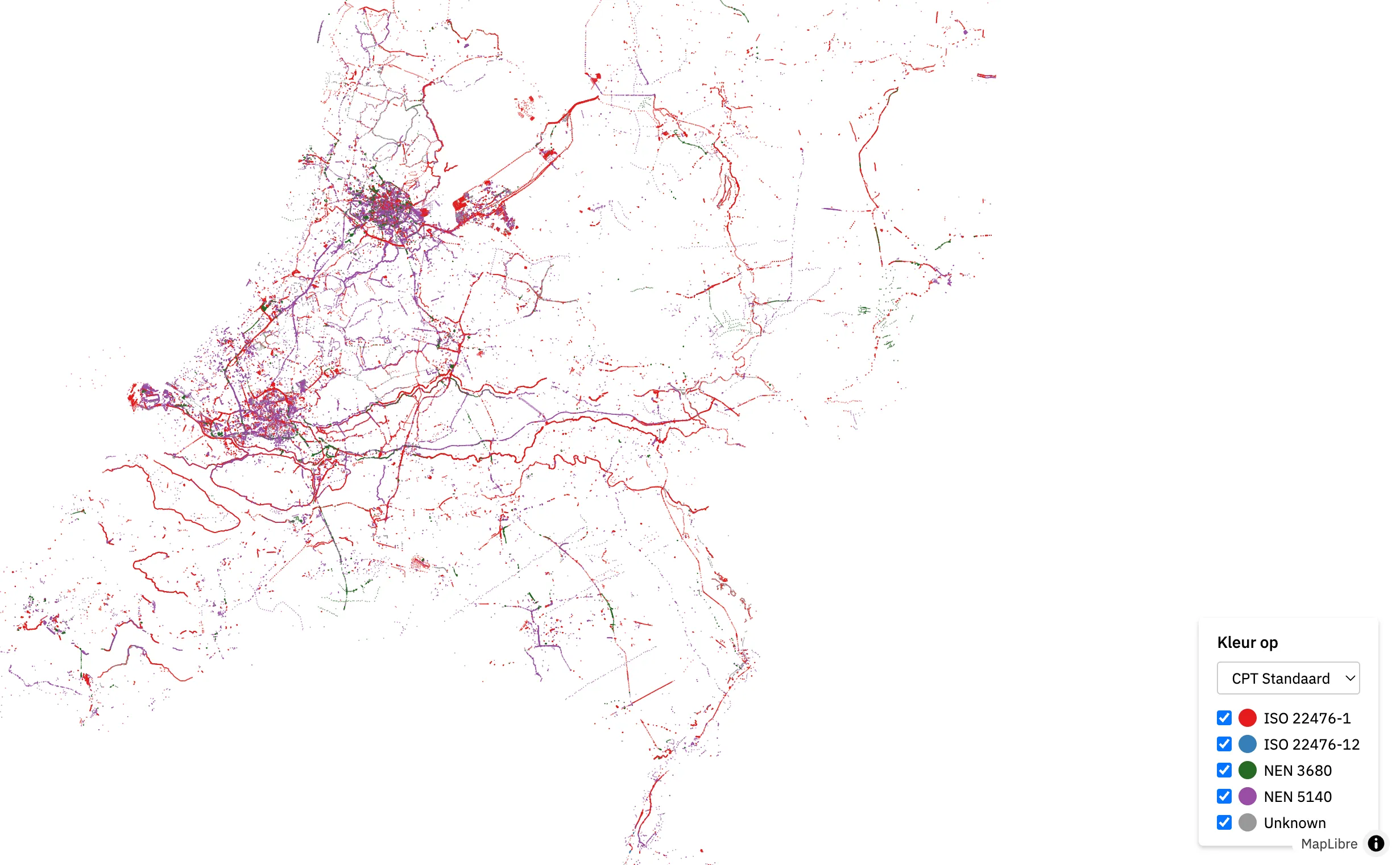
Dutch BRO CPTs
All 237,297 Cone Penetration Tests from the Dutch subsurface registry rendered instantly in the browser with MapLibre GL. Zoom, filter, and recolor without lag from a 35 MB PMTiles file served as a static asset.
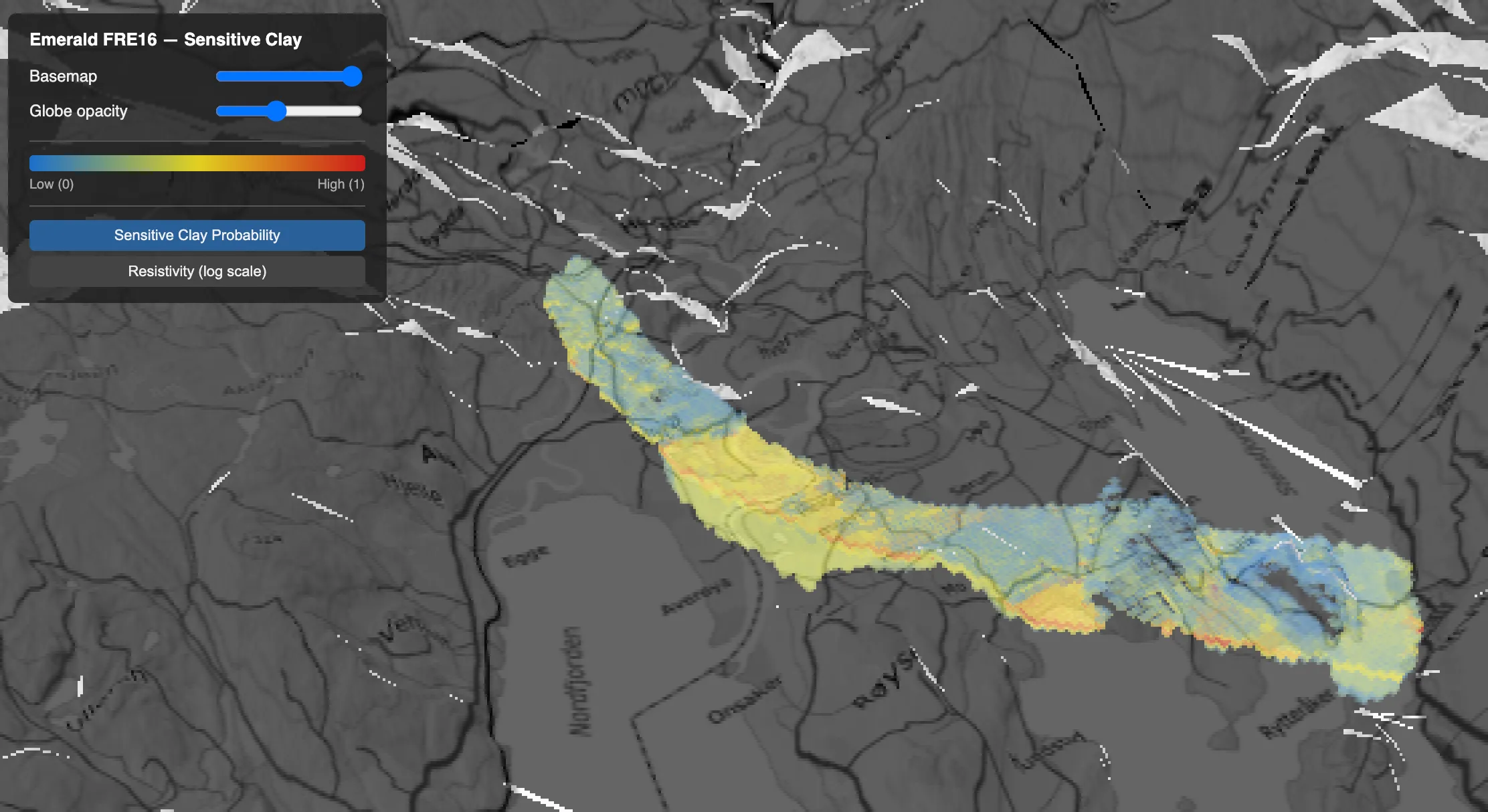
Emerald FRE16, Norway
Sensitive clay probability and resistivity along survey line FRE16 from Emerald Geomodelling, visualized as a 3D overlay on Norwegian terrain in CesiumJS. Toggle between sensitive clay probability and log-scale resistivity, and adjust basemap and globe opacity.
Weka Hills
Geological data visualization in Speckle showing subsurface conditions for infrastructure planning and design coordination.
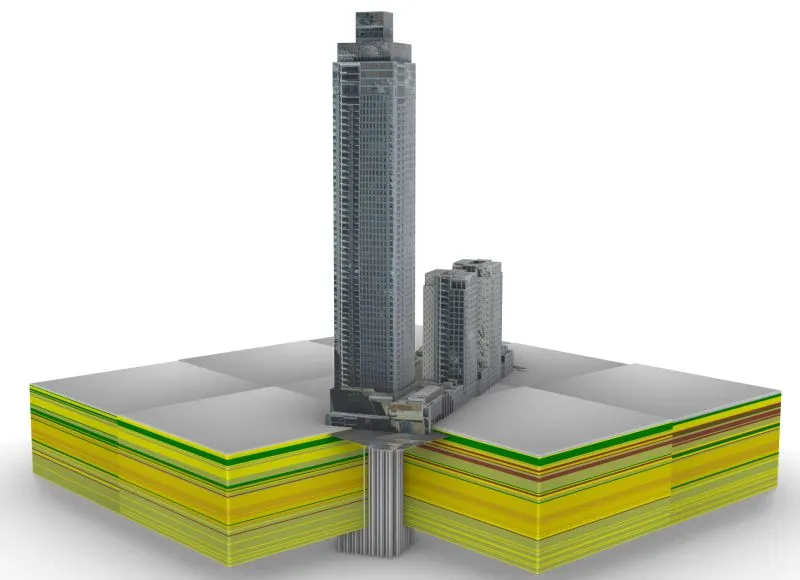
Rotterdam Buildings & GeoTOP
Prominent Rotterdam buildings (Zalmhaven, Maastoren, Blaak/Markthal) shown in Speckle with their foundations and the GeoTOP voxel model — the first 50 m of Dutch subsurface as 100×100×0.5 m voxels with lithoclass and lithology information.
No demos match these filters yet.
Looking for something specific? Schedule a Discovery Call or email us.
Want to see your ground investigation data visualized?
We build custom visualizations and web applications for subsurface data.